
From AI-Assisted to AI-Native
Most AI today is a faster version of yesterday. That's not the same as new.

Right now, most AI experiences are still AI-assisted. The technology is powerful, but it is layered with existing workflows, interfaces, and mental models. It assists users by accelerating tasks, automating steps, surfacing information faster. It's useful. But not transformational.
AI-assisted systems operate within structures designed for human action. The user leads, and AI helps. Interfaces remain static. Workflows stay largely the same. AI plugs into the past.
The next stage, and real opportunity, is AI-native design.
An AI-native system is not an app with a smarter autocomplete. It is a living architecture. The system itself adapts based on context, behavior, intent, and learning. Interfaces are no longer fixed frames. They evolve as the user evolves. They reveal the next right action instead of listing every possible option. They restructure workflows dynamically based on how needs shift in real time.
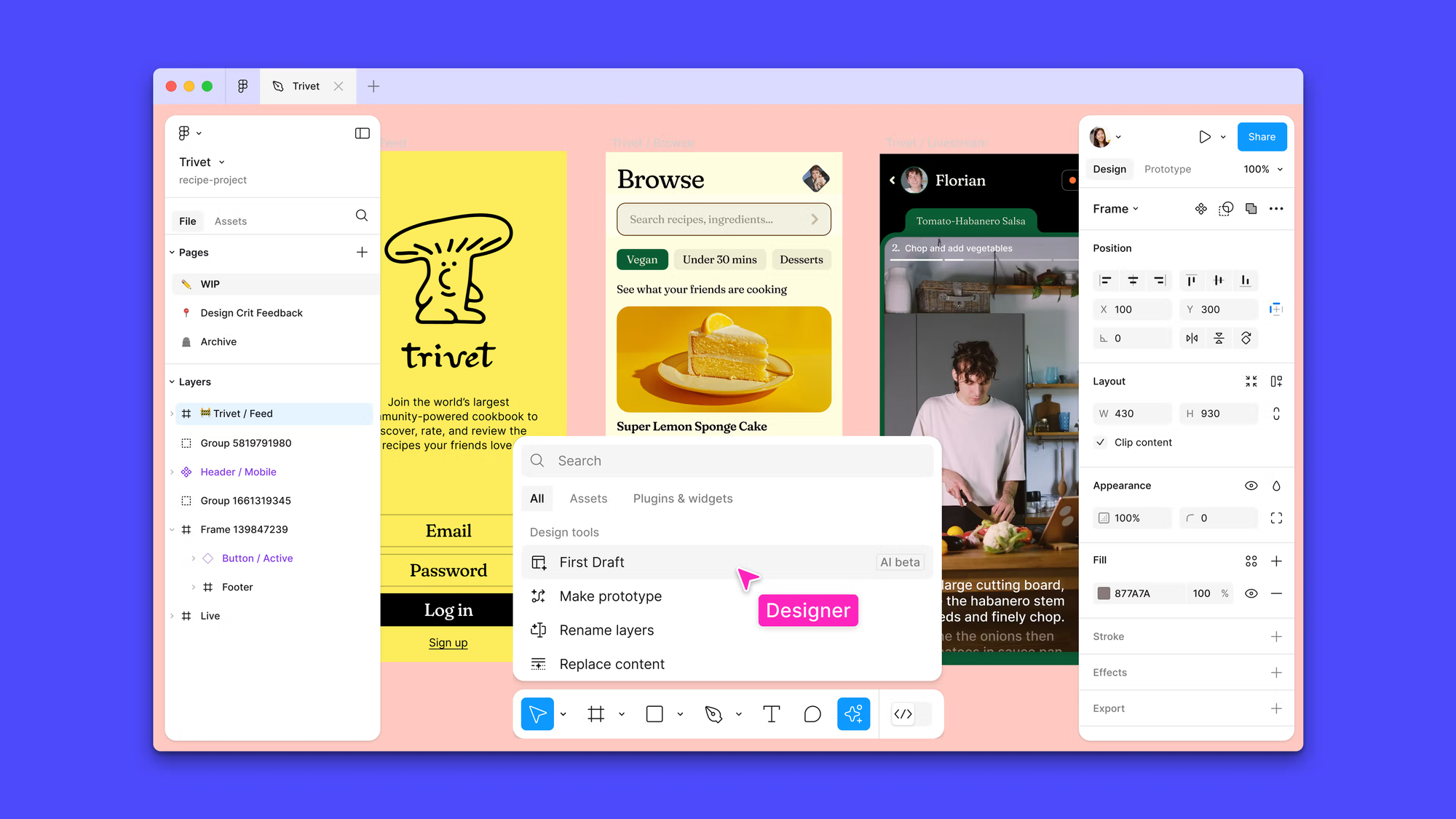
There are already hints of this future in tools like Figma. Figma didn't just digitize static design tools. It created a living canvas where multiple people could design together, adapting naturally to each other's actions without turn-taking. The structure of collaboration itself became fluid.
Now Figma is moving further by introducing AI-native capabilities directly into the design process. Tools that generate copy, suggest layouts, accelerate exploration, and create production-ready assets, all integrated into the human creative flow, not layered on top of it.
Not everyone welcomed this shift at first. When Figma introduced real-time collaborative design, some resisted. Multiple people moving pixels at once felt chaotic, unnecessary, even threatening to traditional creative workflows. It took time for new habits to form. Not everyone embraces it even today. But the shift happened anyway, because the tools made new kinds of work possible.
The same will be true for AI-native systems. Resistance is part of the pattern. Adoption is a work in progress. The tools, the models, and the collaborations are still evolving — and so are we.
This is the first breath of AI-native thinking. Not automation, but adaptive collaboration. Not fixed steps, but responsive systems. AI-native systems are not about replacing humans. They are built to collaborate with humans at the systems level — shaping possibilities, suggesting paths, adapting strategies — not just executing commands.
This shift changes how we think about workflows. Not linear, adaptive. It changes how we think about control. Not full automation but co-creation. And it changes how we think about design itself as not fixed, but dynamic and generative.
Most industries are still stuck in the assisted phase. Partly because it's comfortable. Partly because it's easier to bolt new technology onto old frameworks than to rebuild them. But rebuilding is exactly what is required.
AI-native systems will not look like better apps. They will look like adaptive infrastructures and frameworks for interaction that are flexible, evolving, and deeply human-centered. For builders, startups, and organizations, this is more than a technical opportunity. It is a design opportunity. Design will become one of the strongest strategic moats in the AI-native era. Not just how a system looks, but how it adapts, how it understands context, and how it reveals meaning.
Technology will converge. Models will converge. The thing that won't converge is design: real, adaptive, architectural design. That's the difference between tools that feel inevitable and tools that get forgotten.
The future isn't about using AI. It's about building things that are only possible because of it. That window is open. It won't stay that way.
Blurry. The human layer of AI.